
Features
Opinion
Regulations
Viewpoint: Public vs. private support: The imbalance at the heart of U.S. aquaculture
June 25, 2026 By Joe Cardenas, Telchine Energy Technologies
 Joe Cardenas says recent industry events demonstrate a sad reality of why U.S. aquaculture growth remains stagnant, despite reporting record funding support from governmental bodies. (Photo: Jean Ko Din, RAStech Magazine)
 Talking Points
A recent trade show highlighted the challenges facing U.S. aquaculture, revealing a sector heavily reliant on government funding rather than commercial success. The event saw more third-party representatives than actual farm operators, raising concerns about the industry's direction. Despite significant federal investments, collaboration between agencies and farms remains limited.
- U.S. seafood production from aquaculture is declining, with fewer commercial operators present at industry events.
- Government agencies, including NOAA and USDA, invest billions annually in aquaculture research and support, yet tangible benefits for farmers are scarce.
- International examples show successful aquaculture sectors prioritize direct support to operators over research alone.
This situation underscores the need for greater engagement between the public and private sectors to foster a thriving aquaculture industry in the U.S., leveraging existing expertise and resources effectively.


A recent trade show hosting RAS operators, vendors, and other public agencies became a metaphor for the current state of U.S. aquaculture.
In short, the term “The Emperor Has No Clothes” seemed most appropriate, largely due to the fact that the U.S. aquaculture engine is currently running off of research, academia, and non-governmental organizations (NGOs) funded by federal and state agencies and not the results (or reality) of what the commercial sector is doing on the ground.
U.S. seafood production from aquaculture is in decline and can be validated by looking at production numbers and aquaculture license holders, state by state. At this latest conference, third parties outnumbered farm operators at an alarming ratio. Perhaps most complexing, the atmosphere seemed to ignore this glaring observation.
Talks were given on every aspect of RAS operations, despite not having relevance to many in the room. Government agencies spoke about all of their work being done in attempt to help the sector, yet few examples were given of significant collaboration with farms. Majority of Ag Tech representatives attempted to demonstrate their return on investment (ROI) to the sector despite the reality of not having the U.S. market share as a domestic-only supplier. And lastly, there were the investor-centric speakers who teased interest in the sector, but again, not currently looking directly at commercial operations. This story has been on repeat for so long, few question the realities or consequences. And why would they?
Funding is at an all-time high as it relates to the U.S. government investing in research, marketing, education, and governance of aquaculture. Billions of dollars a year are going towards endeavours to “help” grow domestic seafood production. Although it would be almost impossible to list it all, I can think of a few examples where I’ve observed this kind of imbalance.
For example, National Oceanic and Atmospheric Administration (NOAA) and its Sea Grant program average an annual federal investment of about US$16.3 million. The most recent funding cycle earmarked $14 million across “strategic aquaculture areas,” while another invested $9.4 million into 25 localized research projects.
USDA’s National Institute of Food and Agriculture (NIFA) invests $2 billion annually in research, education, the Extension program, and outreach that keep American agriculture productive, profitable, and at the forefront of innovation. But again, it doesn’t outline specifics for aquaculture. USDA also has a Research Facility Act program with a $125 million annual investment in agricultural research.
Florida lawmakers recently finalized almost $6 billion in funding on the state agriculture and environment departments, as well as the Florida Fish and Wildlife Conservation Commission. Looking closer at the proposed budget, however, Florida’s aquaculture professionals don’t seem to see any major investment in developing the sector.
Universities also spend hundreds of millions of dollars annually on all combined aquaculture research, but that is from various sources from federal, state, etc. Not to mention, there are NGOs, like Bigelow Laboratory, Center for Responsible Seafood, Oceana Inc., Ocean Reef Foundation, Ocean Conservancy, Alaskan NGOs, etc.
To the point, today, we have more U.S. public sector employees in aquaculture than actual private sector farmers and staff. Farms account for a small fraction of the direct spending from the public sector when it comes to on-farm trials, public/private partnerships, grant distributions, etc. These are all red flags for the short and long-term success and growth of the commercial Industry, demonstrating the need to increase mutual engagement from both sides of the aisle on these challenges and begin to better synchronize efforts.
NOAA just announced it will be funding a research-based initiative through the University of New Hampshire, spending over US$13.5 million a year to attempt to trickle success down to the private sector. The U.S. Department of Agriculture (USDA) took this route decades ago with the creation of RACs, or Regional Aquaculture Centres, located in five regional hubs. Their mutual goal? To grow the for-profit aquaculture sector. What is debatable is the ROI of these centres and what, if anything, should be expected from NOAA’s similar attempt that will lead to improved results. We have also seen the birth of the new Office of Seafood under the USDA. Much of the dust from this cloud has yet to settle in terms of direct impact on the aquaculture sector. Early observations are that there is a great deal of excitement and hope from domestic producers that a new office equates to a new approach taken.
As we’ve seen from other countries such as Norway, Oman, Japan, China, Egypt, Chile, etc., which have a proven track record of effectively investing in aquaculture, a choice was made to better steer both capital and government resources directly into the hands of operators. That has come in many forms, such as public backing of blue bonds, loan guarantee programs for aquaculture equipment, lending programs to farms that cater to unique collateral and forms of ownership, etc. International markets did not abandon the approach of continuing research, however, they simply held a higher standard towards the level of return on that investment and instructed the academic institutions to work more directly with the operators.
How else can we better align our current strategy in the U.S. that equates to a growing, prosperous aquaculture sector that takes advantage of our renowned talent and skillsets, pioneering technology and growing market demand?
The farms that have persisted through good years and bad have the knowledge and acumen to lead and train the next generation of operators. Shovel-ready projects are ready to launch with world-leading know-how, operational expertise and the ability and dedication to hit the ground running. We need to allow good farms to become great with the help of our government’s support and build a sector around our strengths in becoming the global leaders vs followers in aquaculture.
This change will happen if the industry has the fortitude (and will) to move the current goal posts. That requires farmers and future farmers to get more involved in the funding discussions. The private sector needs to be seen and heard to turn the tides and help rebalance the path we are currently on. There needs to be a better story told than just repeating the same playbook and relying on a “trickle down” approach. What we are doing today with public/private partnerships fails to meet the definition for private operators, seafood consumers and the sector as a whole.
Let’s do better by supporting the brilliant farmers and operators who are eager to make the industry successful.
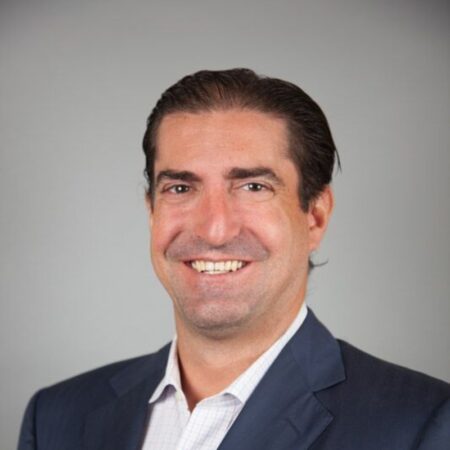 Joe Cardenas is the chief business development officer at Telchine Energy Technologies, currently working on system designs, RAS equipment manufacturing, and automation and controls. Prior, Joe had earned more than 10 years of experience as the founder of Aquaco, a commercial, marine RAS operation in Florida.